Designing the patch is the fun part. The decision that actually determines whether it stays on the gear is the one most buyers make last and least: the backing. With PVC patches that choice matters even more than usual, because the material quietly rules out the attachment method most people assume they will use. If you have ever ironed on an embroidered patch and expected to do the same with a rubber one, this is the piece to read before you order.
Why PVC changes the backing math
A PVC patch is not fabric. It is a molded rubber-like piece, typically about 2 to 4 millimeters thick, and that solid body is exactly why iron-on backing does not work on it. Heat-seal adhesive relies on an iron or press driving heat through the patch to melt a glue film underneath. On a thick PVC blank the heat cannot pass through, so instead of activating any adhesive it builds up at the edges and can melt the patch borders, warping the piece and sometimes fusing molten PVC permanently to the garment. Reputable patch makers simply do not recommend iron-on for PVC, and that single fact reshapes your options. What is left are sew-on, hook-and-loop, glue, peel-and-stick adhesive, and magnetic, and two of those, Velcro and heat-seal-style options, require the patch to be built with a laminated fabric backing rather than bare rubber, so it is a decision to make before production, not after.
The two that actually last: sew-on and Velcro
Sew-on is the permanence benchmark. The patch is stitched down through its border channel, and once double-stitched around the edge it survives repeated laundering and hard outdoor use better than anything else. The trade-off is that it is fixed in place and needs a sewing machine or a patient hand, so it suits uniforms, work jackets, and gear that will never need the patch removed. Hook-and-loop, the Velcro-style backing, is the other durable choice and the most popular one for PVC specifically. The loop side is built onto the patch and the hook side is sewn or adhered to the garment once, after which the patch snaps on and peels off in seconds. That makes it the default for morale patches, tactical plate carriers, flight suits, and any program where people swap patches or where the same jacket rotates through different designs.
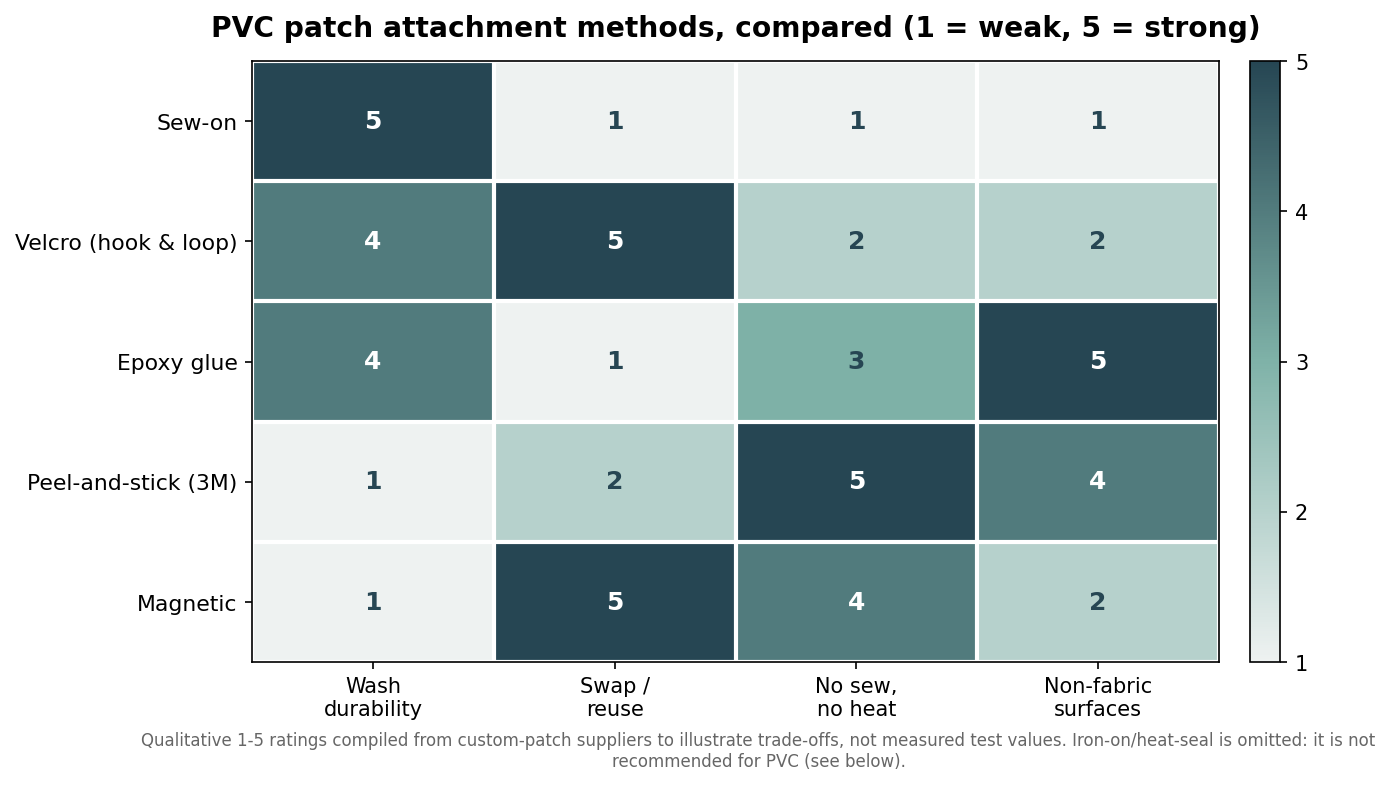
The comparison above lays out the trade-offs at a glance. Sew-on wins outright on wash durability but scores lowest on convenience and reuse. Velcro gives up a little laundering resistance in exchange for instant swapping, which is usually the right trade for anything worn and updated often.
The no-sew options: epoxy, peel-and-stick, and magnetic
When stitching is impractical, three routes remain, and each fits a narrow job. Epoxy or plastic-bonder glue, such as a two-part plastic epoxy, forms a genuinely permanent, wash-resistant bond and is the go-to for fixing PVC patches to caps or hard goods where you cannot run a needle. It demands care: a full cure typically takes 12 to 24 hours, and there is no repositioning once it sets. Peel-and-stick adhesive, the 3M-style backing, needs no heat and applies in seconds, which makes it perfect for event swag, laptops, water bottles, and hard smooth surfaces, but it is semi-temporary and not built to survive the laundry. Magnetic backing attaches without piercing the fabric, so it works for name badges and thin jackets, but its hold is light and it is unsuited to thick fabrics, heavy patches, or rough outdoor wear.
Where each backing lands on permanence
It helps to see all of the options on one axis, because the real question behind most backing decisions is simply how permanent you want the attachment to be.
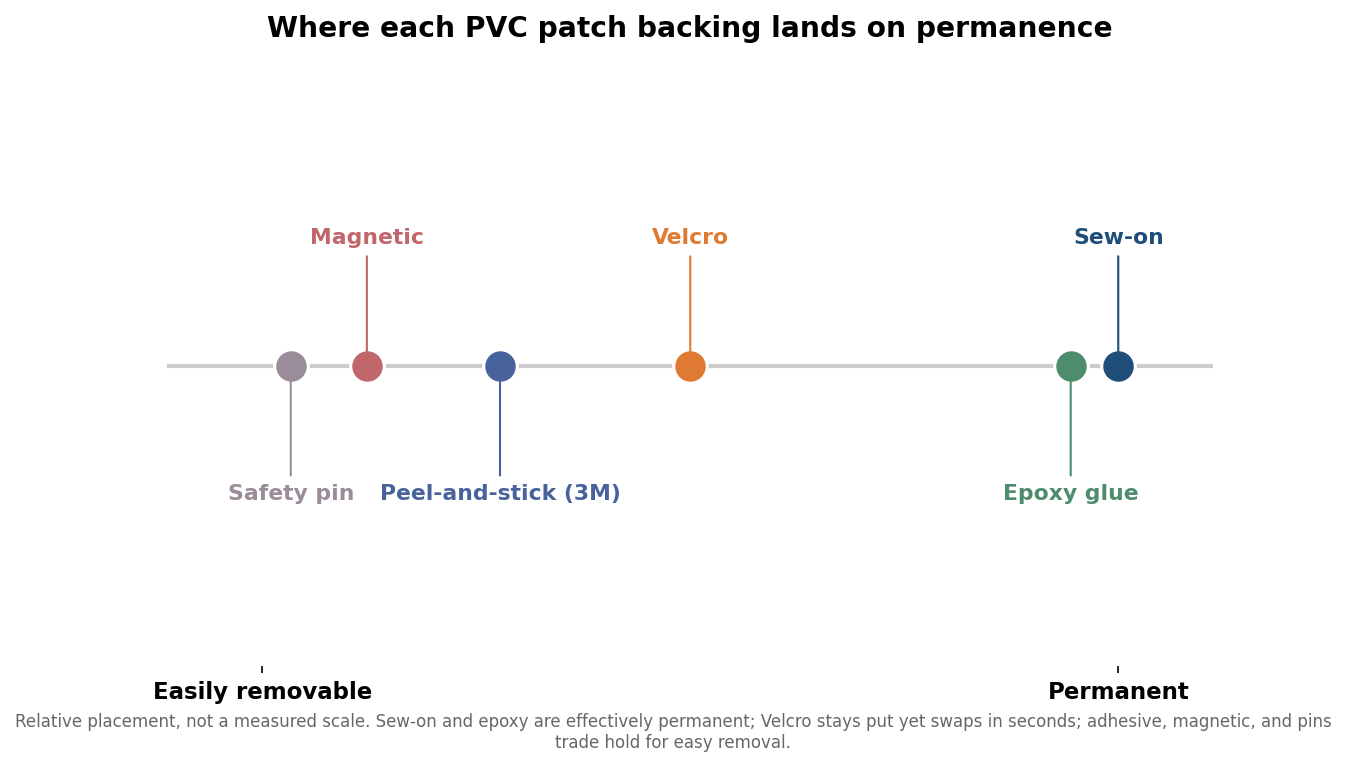
Sew-on and epoxy sit at the permanent end and are effectively there for the life of the item. Velcro occupies the useful middle, holding firmly through normal wear yet coming off on purpose in a second. Peel-and-stick, magnetic, and safety pins cluster at the removable end, trading staying power for the ability to reposition or pull the patch off at will. Deciding where on this line your use case belongs answers the backing question faster than any feature list.
Match the backing to the job
Work backward from how the patch will live. A patch for a uniform or work jacket that should never move wants sew-on. A morale or tactical patch that people collect and swap wants Velcro, and you will need to confirm the garment already has, or can get, the matching hook field. A patch destined for a cap or a hard product where sewing is awkward is a job for epoxy. Event giveaways meant to stick on a laptop or bottle call for peel-and-stick, with the understanding that they are not forever. And a reusable badge on dressier clothing is where magnetic earns its place. Match those honestly and the patch does its job; mismatch them and even a beautiful mold ends up in a drawer.
One practical note on timing and cost: because PVC patches are molded, the design and backing get locked in at tooling, so choose the backing before the mold is cut, especially if you want Velcro or any fabric-backed build. Custom PVC patches are otherwise fairly accessible, with some suppliers offering low or no minimums and production in as little as around ten days, but none of that speed helps if the backing is wrong for where the patch has to stay. Decide that first, and the rest of the order falls into place.