A custom PVC patch is a short list of decisions, relief, backing, size, softness, and finish, and the right answers change completely depending on where the patch is going to live. A morale patch clipped to a plate carrier and a logo patch sewn onto a work jacket are the same material solving different problems. This guide walks through the common applications and spells out the spec that tends to fit each one, so you can match the patch to the job instead of ordering a generic square and hoping it works.
Tactical and morale patches
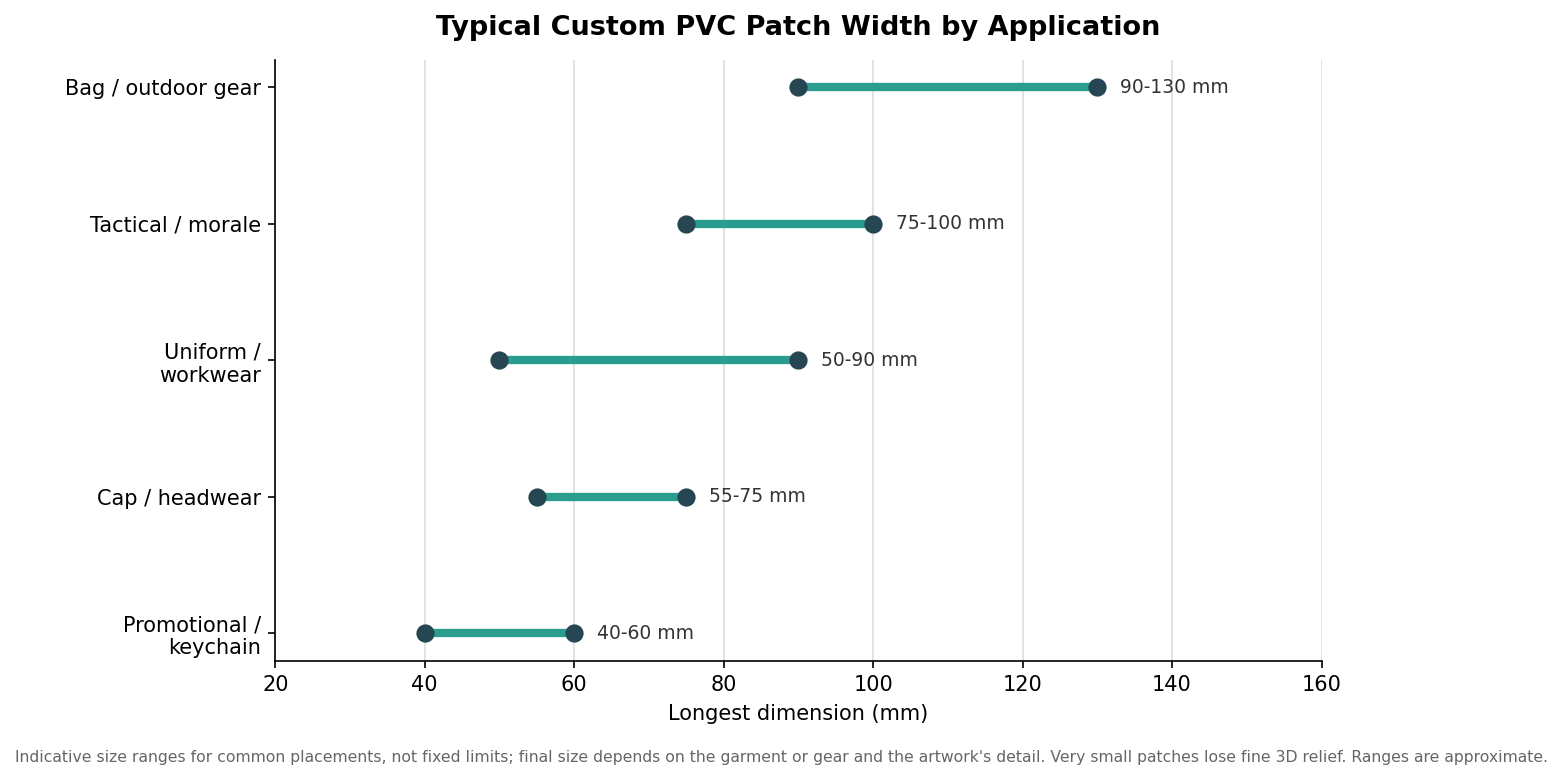
For military, law enforcement, EMS, and the wider morale-patch community, the defining choice is hook-and-loop backing. Users swap these patches constantly between gear, so a loop-side patch that presses onto a hook field is almost always what they expect, not a sewn or adhesive version. Either 2D or 3D relief works, and 3D is popular here because raised elements read well on a subdued design. Size usually lands in the 75 to 100 millimeter range so the artwork is legible at arm’s length. Soft, flexible PVC holds up to the outdoor, high-wear life these patches lead, and muted or single-tone palettes are common for field use, with brighter versions reserved for collectible or unit-pride designs. Softness itself is worth a word on the spec: a more flexible durometer conforms to curved gear and feels better in the hand, while a firmer blend holds a crisp edge on fine lettering, so tell your supplier which matters more for the design.
Uniform and workwear branding
When a company logo goes onto a shirt, jacket, or coverall that gets worn and washed regularly, permanence and a low profile matter more than swappability. That points toward a sew channel or heat-seal backing rather than hook-and-loop, so the patch stays put through laundering and does not snag. A 2D patch sits flatter and is more comfortable under a seatbelt or a bag strap, which suits everyday wear. Keep the size modest, often 50 to 90 millimeters depending on placement over a chest or sleeve, and confirm your brand colors as specific Pantone references so the logo is consistent across a run and across reorders. Durability is the whole point here, so it is worth telling your supplier the patch will be laundered.
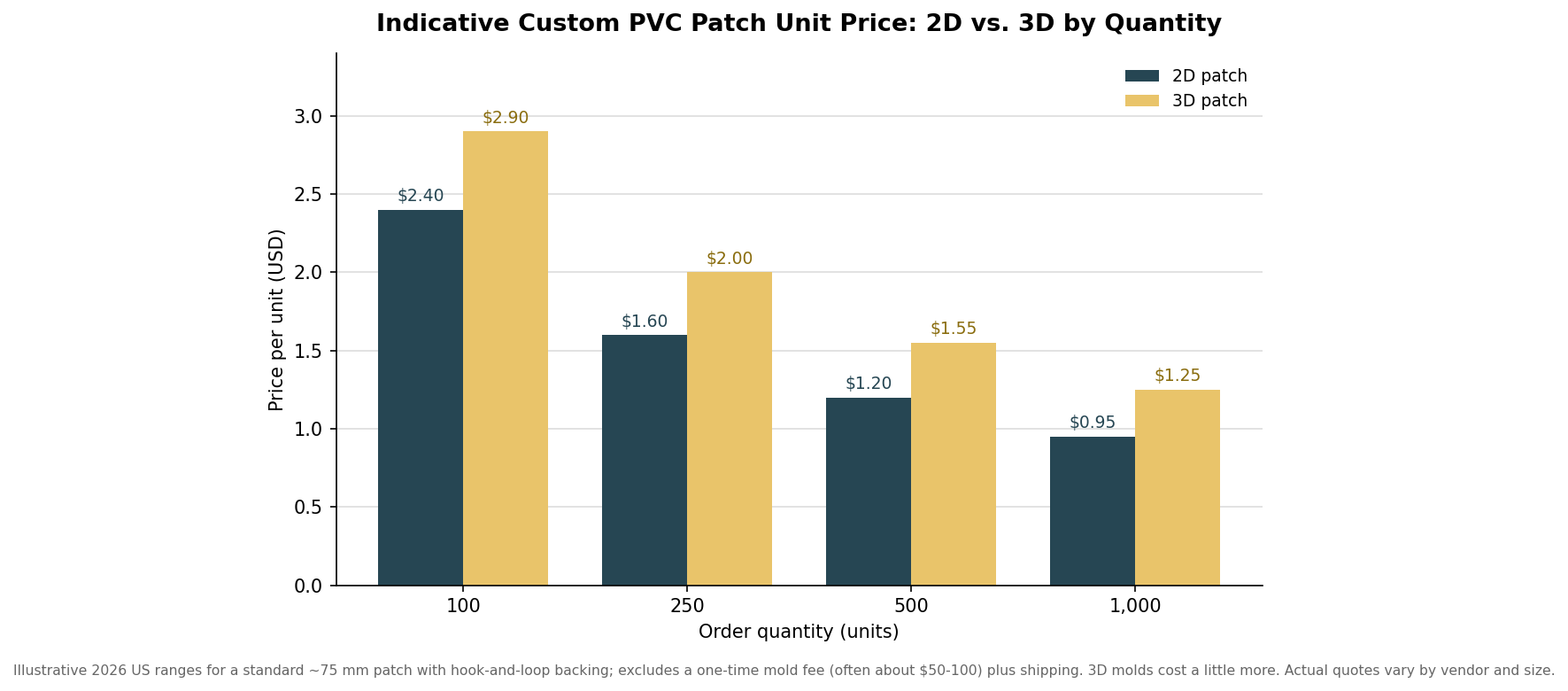
Cost tracks relief and quantity more than application. The chart shows indicative unit pricing for 2D versus 3D patches as volume climbs, and the gap between them is modest at higher quantities. What the bars leave out is the one-time mold fee, commonly in the range of about fifty to a hundred dollars, which is charged once per design and then amortized across the run. That is why patches feel expensive at 100 units and cheap at 1,000, and why consolidating designs into fewer molds is one of the simplest ways to control the total.
Caps and headwear
Patches on caps have their own constraints because the surface is small and slightly curved. A low-profile 2D patch in the 55 to 75 millimeter range generally sits best on a flat-front or trucker cap, keeping the relief shallow so it does not catch or bulk up the front panel. Heat-seal or sew-on backing is typical since cap patches are usually permanent. If you want the tactile, premium feel of 3D, keep the design bold and the element count low, because fine 3D detail gets lost at cap scale. This is a case where restraint in the artwork pays off more than trying to fit everything onto the panel. If a cap program and a jacket program share a logo, it is often worth commissioning two sizes from the start rather than shrinking one patch to fit both, because a mark scaled down too far loses the detail that made it recognizable.
Bags, backpacks, and outdoor gear
Gear gives you room to work with, so this is where larger patches make sense, often 90 to 130 millimeters across a backpack panel or laptop-bag face. Hook-and-loop backing is common on technical bags that already have loop fields, while sew-on works for a permanent placement. Weather resistance is a real advantage of PVC here, since the material shrugs off rain and UV far better than embroidery, so an outdoor brand or an event that lives outside is well served by it. Larger patches also give fine detail and multiple colors room to render cleanly, so an intricate logo that would turn muddy at cap scale can be reproduced faithfully across a bag panel. The range chart below gives a feel for how size expectations shift from a keychain-scale promo piece up to a full gear panel.
Promotional patches and brand merch
For giveaways, event swag, and retail merch, the priorities flip toward cost, tactility, and easy attachment. Smaller patches in the 40 to 60 millimeter range keep the unit price down and suit keychains, hats, or stick-on placements, and a 3D finish can make a small piece feel more premium in the hand than its price suggests. Adhesive or hook-and-loop backing lowers the friction of actually using the patch, since not every recipient owns a sewing kit. Special finishes like glow-in-the-dark or reflective ink can turn an ordinary promo patch into something people keep, which is the whole goal of merch. Across every one of these applications, the pattern is the same: decide where the patch lives first, let that choose the backing and the size, then use relief and finish to hit the look and the budget you are after.